

Consideration for people with disabilities under the new lifestyle
[The following is an announcement from Chiba Prefecture.]
In Chiba Prefecture, we are asking people to practice a "new lifestyle" by avoiding the three Cs, maintaining physical distance, wearing masks, etc., in order to prevent the spread of COVID-3 while maintaining daily life.
However, as a result, people with disabilities have reported experiencing various anxieties and inconveniences in their daily lives due to the characteristics of their disabilities. In order to alleviate these anxieties and inconveniences, consideration is needed from prefectural residents and business operators. We ask for your cooperation.
Considerations for disabilities
(1) Examples of considerations for people with visual impairments
People with visual impairments have difficulties maintaining physical distance from others, finding it difficult to know where to wait in line at the cash register, and not understanding that they need to actually touch and check the products when choosing them when shopping. We ask that residents and business owners take the following precautions.
- If you see a visually impaired person who appears to be having trouble, such as when waiting in line at the cash register, actively speak to them.
- People with visual impairments will understand that they need to actually touch and inspect items when shopping, so there will be plenty of disinfectants and other items installed in stores.
- When assisting visually impaired people at the counter, provide detailed explanations about the situation around the counter, such as whether or not transparent acrylic sheets are available and where to hold an IC card for electronic payments.
- When appropriate distance can be maintained, increase the clarity of speech by removing masks or using face shields instead of masks depending on the situation.
(2) Examples of consideration for people with hearing impairments
When communicating with others, people with hearing impairments rely on the mouth movements and facial expressions of others. With the increasing number of people wearing masks under the new lifestyle, communication has become more difficult. Furthermore, there have been cases where sign language interpreters have been refused entry to medical institutions and other facilities to prevent the spread of COVID-19. We ask that residents and businesses in the prefecture take the following precautions.
・People with hearing impairments may understand what is being said by looking at the other person's mouth movements and facial expressions, so if you can maintain an appropriate distance, remove your mask when communicating so that you can see the other person's mouth movements. Alternatively, use a face shield or transparent acrylic sheet instead of a mask.
- For people who require communication support such as sign language interpreters when visiting a medical institution, etc., we will respond flexibly by allowing sign language interpreters to accompany them, provided that we understand the importance of sign language communication and take infection prevention measures, and if it is difficult for a sign language interpreter to accompany them, we will allow remote sign language interpretation via tablets, etc.
- At cash registers and counters, we will provide writing paper and communication boards with standard conversation examples so that people with hearing impairments can communicate by writing.
(3) Other examples of consideration for people with disabilities
In addition to visual and hearing impairments, people with intellectual disabilities have difficulty knowing where to stand when lining up at cash registers, and people with sensory sensitivities have difficulty wearing masks. Additionally, some people with disabilities do not fully understand the need for a "new lifestyle" and find it difficult to maintain an appropriate distance from others. The following are examples of ways to respond to these situations, so we ask for your cooperation.
- When indicating where to line up at a cash register, etc., we understand that some people may find it difficult to understand just by drawing a line, so we will make it easy to understand by using a shoe mark or something similar.
- Understand that some people have difficulty wearing masks due to disabilities or physical conditions, such as those with sensory hypersensitivity or a high risk of heatstroke.
- Understand that some people find it difficult to maintain an appropriate distance from those around them, and take measures such as maintaining an appropriate distance from those around you and calling out to them.
(4) Help Marks, etc.
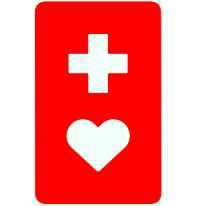
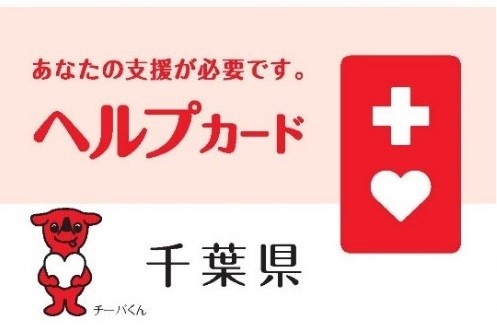
The Help Mark is a mark that can be used to notify people around people who need assistance or consideration, even if it is not obvious from their appearance, such as people with disabilities like those mentioned above, people using prosthetic limbs or artificial joints, people with internal disabilities or incurable diseases, or those in the early stages of pregnancy.Help cards are also available on which detailed information such as the type of consideration needed and emergency contact information can be written.If you see someone carrying a Help Mark, please be considerate.
The necessary considerations vary depending on the type and characteristics of the disability. If you see a person with a disability who appears to be in trouble, please actively speak to them.
*The Act on the Elimination of Discrimination against Persons with Disabilities, which came into effect on April 1, 2016, stipulates that when a person with a disability expresses a desire to remove social barriers, government agencies and businesses are obligated to provide necessary and reasonable accommodation according to the situation of the person with a disability, provided that the burden of doing so is not excessive.